A strategist draws a 1980s parallel to argue bipartisanship could power a ‘bull stampede’
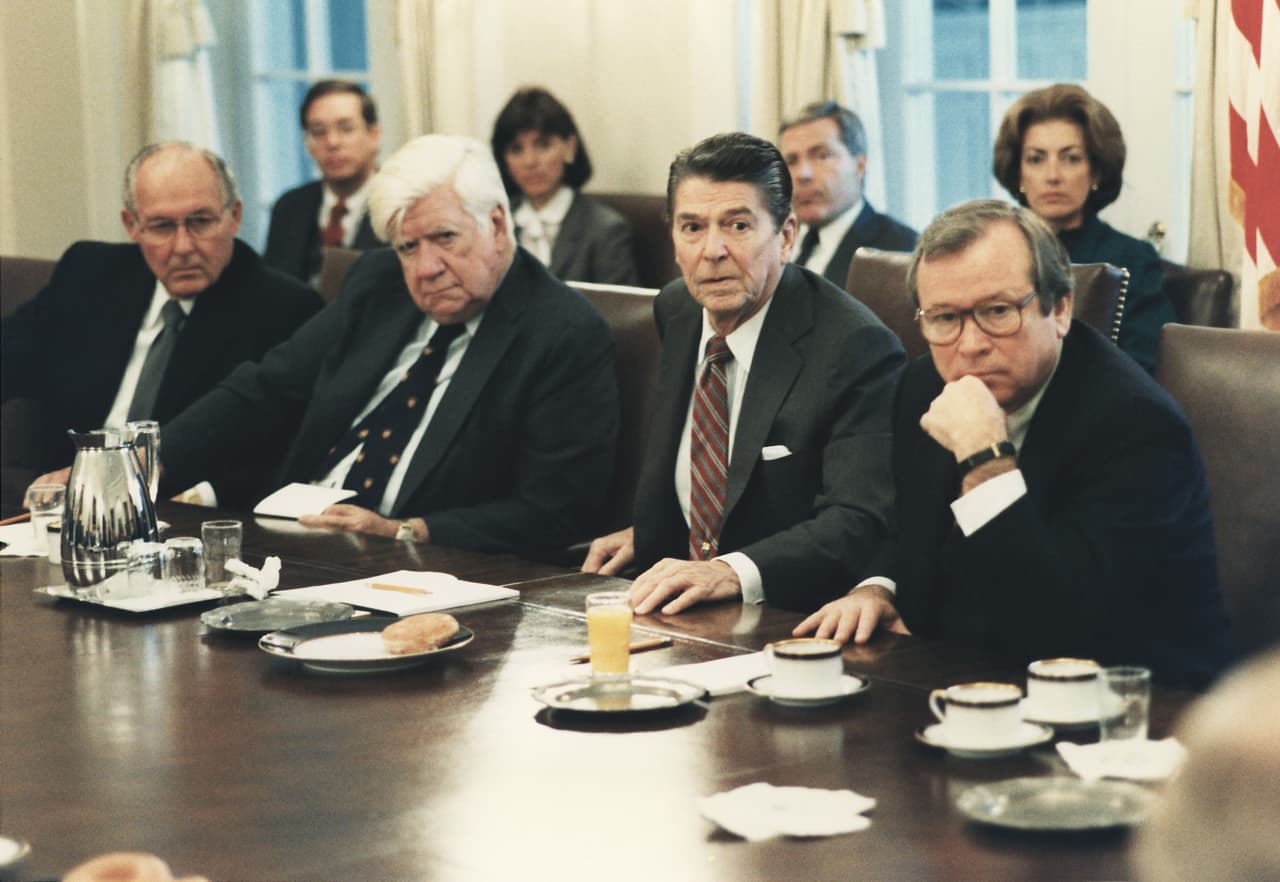
In the 1980s, a Republican president, a Democrat Speaker of the House and an inflation-fighting Federal Reserve chairman powered a stock-market rally.
The strategist's argument that bipartisanship could lead to a "bull stampede" in the markets is based on a historical parallel with the 1980s. During that decade, President Ronald Reagan, a Republican, worked with Speaker of the House Tip O'Neill, a Democrat, to pass significant tax reforms, while Federal Reserve Chairman Paul Volcker implemented monetary policies aimed at curbing inflation. This period of cooperation and decisive action was accompanied by a strong stock market rally.
The strategist's point is that similar cooperation between lawmakers and a proactive Federal Reserve could have a positive impact on the markets today. In an era of heightened partisanship and gridlock, the idea of bipartisan support for economic policies is seen as a potential catalyst for growth. The 1980s example suggests that when politicians and policymakers work together to address key economic issues, it can create a favorable environment for investors.
To watch next: will lawmakers be able to put aside their differences and work together on economic policies, and how will the Federal Reserve respond? The strategist's argument implies that investors are looking for signs of cooperation and a clear policy direction. If bipartisanship can be achieved, it could lead to increased confidence among investors and a subsequent market rally. Conversely, continued gridlock and policy uncertainty could weigh on market sentiment.
Originally reported by marketwatch.com. FundNews adds analysis for finance & markets readers.